The Film
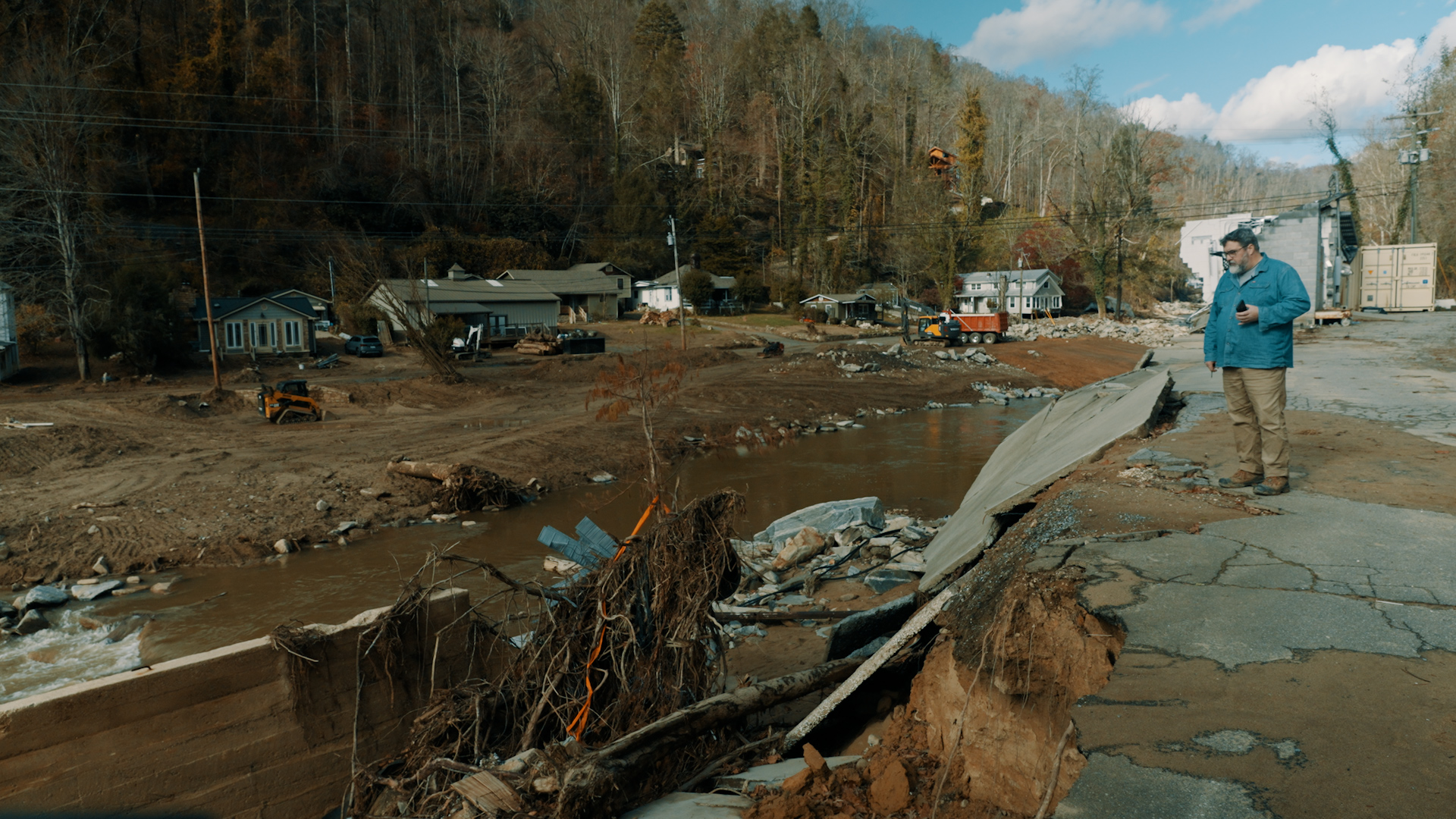
Out of a Flood is a feature length documentary shot in and around Asheville, NC in the wake of the region's worst climate disaster on record. Following residents, artists, business owners, and volunteers in the year after the storm, the film provides a first-hand account of how catastrophe can reveal our communities' hidden capacity for collective action, and what we need to survive disaster.
Director's Statement
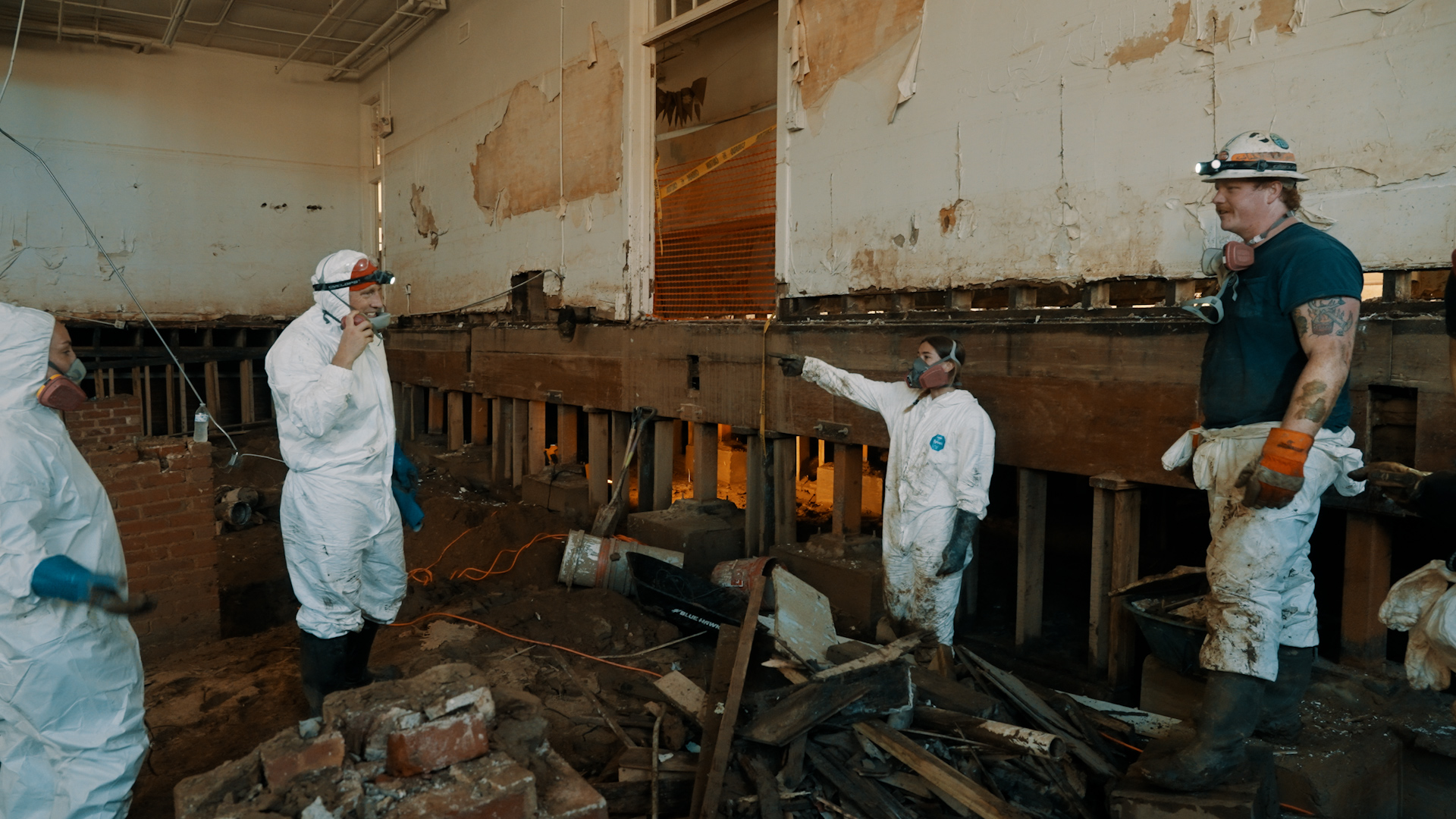
Disasters, as they exist in the media, often create a very specific narrative. They are told as tragedies, and usually come with a great deal of shocking and horrifying imagery that grabs our attention. As I started documenting the disaster that was unfolding around me in Western North Carolina, I encountered many of the horrifying stories of loss and images of destruction that I expected to see in the wake of such an event, but another thread began to emerge: the incredible community bond that appeared as countless people dropped everyday life to feed, house, and care for one another, literally and figuratively digging each other out of the mud.
The strange, unexpected part of experiencing this crisis was that in the midst of such a tragic event I saw the most profound sense of community and goodwill I have ever experienced first hand. And I wasn't alone — this sentiment was echoed countless times by the people I spoke with.
I eventually learned, through the research presented by author Rebecca Solnit in her book A Paradise Built in Hell, that this experience of profound community bond in the midst of disaster was not an isolated event, but is almost universal in times of disaster. That the sense of community is sometimes so great that some people look back on these experiences with almost a sense of warmth, even in the midst of how tragic they are. Yet despite how common this experience is, it's a side of the story that rarely gets told.
My goal for the film became capturing and reflecting the experience of disaster in a way that honored this paradox and nuance. To offer a glimpse into the experience of those who lived through it while refusing to sensationalize the tragedy or whitewash the difficulty. To hopefully reveal a glimpse of the powerful community bonds that emerge in a crisis.
What is shown in Out of a Flood is a story that left me with questions that feel urgent and relevant to our times: how do we find this sense of community on a larger scale? Must it take a disaster for this capacity to be revealed?
Excited to share this story with you,
— Thomas Flight